Posts

Showing posts from March, 2025

With Me - Love Does Togetherness

Image
Parenting and teaching are not solo endeavors. They thrive on connection, collaboration, and a sense of togetherness. When children feel a deep sense of unity with the adults guiding them, they develop trust, confidence, and a willingness to learn. Whether in the home or the classroom, relationships built on teamwork rather than control create an environment where children feel valued, heard, and supported. Instead of enforcing authority from above, we can walk alongside our children, reinforcing that we are in this together. Unity in parent-child and teacher-student relationships fosters a sense of security. When children know they are not alone in their struggles, they become more open to guidance. A child facing a difficult math problem or struggling with big emotions is far more likely to persevere when they feel they have an ally rather than a critic. Likewise, when we acknowledge our children’s perspectives—whether they’re three years old or sixteen—we reinforce that their voice...

Next Time - Love Does Patience and Perseverance

Image
Raising and teaching kids is a long game—one filled with small victories, frustrating setbacks, and countless do-overs. No matter how much we guide them, kids won’t get it right every time. They’ll forget what we’ve taught them, push boundaries, and make mistakes. And honestly? So will we. As loving parents and teachers, our job isn’t to expect perfection but to model patience and perseverance, knowing that growth happens over time, not all at once. It’s easy to get discouraged when lessons don’t seem to stick, when we have to repeat ourselves for what feels like the hundredth time, or when we lose our own tempers despite our best intentions. But every moment offers another chance to do better. Instead of dwelling on what went wrong, we can focus on the power of "next time"—the next time we calmly respond instead of reacting, the next time they try again and get a little closer to understanding. It’s in these repeated efforts that real learning takes root. So let’s give our...

AND - Love Does Collaboration

Image
 AND Adults and children. Parents and teachers. Home and community. Co-parenting. In-laws.  Sometimes, these feel like opposing forces. But parenting or teaching with love shows us the importance of working together; us AND the other. Sometimes it's easy - our child has a teacher that we naturally click with; we share a similar parenting style with the child's other parent. Other times it's hard - our in-laws feel intrusive; we are a teacher with a student whose parents are uninvolved and unresponsive.  The article on collaboration (link below) highlights the benefits of collaborating which include academic success, better emotional skills, and stronger relationships. It also mentions some of the pitfalls that can occur when adults do not have a collaborative relationship. Collaborating with others in our children's lives may not always be easy, but the benefits are worth it. When we focus on the kids first and on their growth and future, we are more often able to wo...

Won't You Sing - Love Does Music

Image
“Won’t you sing?” Music is a universal language that we begin sharing with our children from a very young age. We sing lullabies to babies, dance with preschoolers, listen to music in classrooms, and swap playlist recommendations with teens. Shared musical experiences provide a foundation for building relationships, as well as for physical and cognitive growth. Indeed, making and listening to music is one of the most basic human functions.  Music  allows us to feel nearly all emotions that we experience in our lives. What an incredible thing to share with the kids in our homes and classrooms.  “If children are not introduced to music at an early age, I believe something fundamental is actually being taken from them” - Luciano Pavarotti.  According to an article on brighthorizons.com (link below), “Music ignites all areas of child development and skills for school readiness, including intellectual, social-emotional, motor, language, and overall  literacy . It hel...

Now I Know My ABCs - Love Does Reading

Image
Learning the alphabet (letter recognition) is a skill that happens naturally for most kids between the ages of 2 and 6. While learning the alphabet is often seen as an indicator of later success in other reading skills, research does not support that. What research does support is the importance of sharing reading experiences with our kids and helping them to develop a positive association with books and stories. From looking at board books with babies to acting out stories either read or made up with preschoolers to listening to books on Audible on a road trip with teenagers, there are countless ways to weave reading experiences into our children’s lives.  An article on Parents.com (link below) lists 18 ways to share reading experiences with kids of all ages, including reading aloud, modeling reading for pleasure, and even cooking. The article also mentions the importance of keeping reading fun at home and in early childhood settings. Teachers in elementary settings and beyond nee...

Z - Love Does Zest

Image
The dictionary defines zest as “great energy or enthusiasm.” Whether at home or in the classroom, one of our greatest objectives is for our children to know without a doubt that they are loved. The thesaurus lists synonyms for zest as enthusiasm, eagerness, gusto, and energy. When we love our children zestfully, we love them with enthusiasm, eagerness, gusto, and energy. This comes naturally for some, but it feels uncomfortable for others. And either way, sometimes we find ourselves in the situation of not loving our kids' actions and choices which significantly dampens they enthusiasm we can muster.  Nevertheless, when we make an effort to love with zest, our children will reap the many benefits of knowing they are deeply loved. No, it's not always easy. But we can use the lessons that we have learned from this series; we can manage our own Big feelings, look for Humor in all situations, recognize that Mistakes will be made, see our children for who they are Right now, remembe...

Y - Love Does Yes

Image
“Don’t jump on the couch.” “Stop running!” “No more talking.” These are common phrases we might find ourselves saying to our kids. Given the specific situation, they might well be reasonable requests that help maintain order and safety in our homes and classrooms. Our kids, though, hear only No, No, No.  “You can’t go outside; it’s too cold.” “No, I can’t join you. I have work to do.” “We aren’t doing that activity; it’s too messy.” Sometimes it is cold. There is always work to do. Certain activities can be messy. These are all valid reasons to consider denying a request. But still, our kids spend all day hearing No, No, No.  What if, instead, we made an effort to say Yes? Yes, you can jump! Head out the the trampoline. Yes, you can run! We'll head outside. Yes, you can talk, as soon as your work is done. Yes, we can go outside. Let’s get our coats and gloves on. Yes, I would love to play. I need 20 minutes to work first Yes, we can do that activity. It’s messy, so let’s get a...

X - Love Does eXample

Image
“Your children will follow your example, not your advice.” This anonymous quote puts into words what most parents and teachers instinctively know to be true. All we need to do is think back to when we were kids. I remember a few choice quotes from my parents and teachers - especially specific phrases that they repeated over and over in a variety of situations. But more often, the adults from our childhoods are typically remembered for how they presented themselves, how they treated us, and how they acted toward others. I don't remember a thing my kindergarten teacher said but I clearly remember how she greeted us each day with a smile. I can't tell you any advice my elementary coach gave me, but I do remember the his attitude of work hard and keep your head up. Once we recognize the importance and long-lasting impact of the example we set in our homes and classrooms, we focus on being the best example we can. An article on GoodMenProject.com (link below) gives several concrete ...

W - Love Does Work

Image
When we first hold our newborn child or walk into a class of new students on the first day of school, we often have a shiny happy feeling of love. But it doesn’t take long for sleepless nights with an infant or nonstop chatter in the classroom to dull the shine of that love-feeling.  But that’s when real love shows up. When the newness wears off, and easy emotions fade, that's when we must choose to work at love. Love feels good, but *real* love is more than just a feeling. Real love is a choice. Real love is action. In today’s world, it seems we want maximum results with minimal effort. But that's not real love. Love in any relationship takes work to communicate and understand each other. It takes work to intentionally set aside time to be together and to set aside our preferences in favor of what is best for the other person. In our roles as loving parents and teachers, it also takes effort to provide boundaries, enforce discipline, and teach accountability.  Loving our chil...

V - Love Does Venturous Play

Image
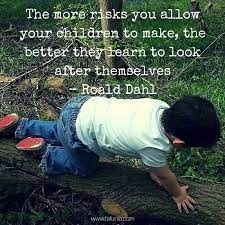
Venturous play - more commonly known as Risky play - includes factors such as speed, height, and tools.  Much of what constitutes risky play has been removed from our homes and schools in our attempts to keep them safe for our children. Unfortunately, this means we have removed the opportunity for our kids to develop self-confidence, resilience, executive functioning abilities, and even risk management skills. These skills are vital to our children's future success and to the future of our communities as well.  Of course, there is a balance to be had. As we discussed before, according to Maslow’s hierarchy of needs, children need to be and feel safe. Ironically, when school and home environments are made overly safe, kids often end up feeling *un*safe because they don't have an opportunity to develop their own risk-assessment guidelines or self-confidence in handling risky situations.  So how do we find that balance? An article on cbc.ca (link below) advises parents and t...

U - Love Does Unconditional

Image
  “I really don’t like you right now! I still love you, but I don’t like you.” I remember overhearing my then 4-year-old say this to one of his siblings. It made me chuckle, but I also thought it was a simple but good explanation of unconditional love.  Unconditional love is quite literally love without conditions. It’s love that has no strings attached. It’s loving our children despite their flaws and regardless of how they perform or what they achieve.  However - and this is so important to understand - unconditional love does not mean always giving our children what they want or accepting what they do.  Instead, it is a mature type of love that means treating them with care and respect, *even while* setting boundaries and maintaining limits. Research cited in a post on foundationforlearning.com (link below) shows many ways that unconditional love benefits our children, including their mental and physical health, brain development, and sense of security. But u...

T - Love Does Trust

Image
Many of us innately understand the importance of trust in relationships, particularly in the relationships we have with a spouse or a good friend. According to an article in Forbes (link below), trust is the aspect of all relationships that allows “people to live and work together, feel safe, and belong to a group.” Trust is crucial not only to relationships with our adult peers but also to our relationships with our children. When we evaluate the idea of trust through the lens of a parent or educator, many of us recognize the need for our children to trust us. Ideally, children trust the adults in their lives to provide for their physiological needs and their safety, as well as trusting them to be kind, fair, and loving. Sometimes, perhaps through no fault of ours, this trust between children and adults is broken. The most important step we can take to build a relationship with our kids is to be intentional in our efforts to gain and keep their trust. Trust is a two-way street. As lov...

S - Love Does Simplicity

Image
Raising and teaching children in today’s highly digital and fast-paced world can be busy, complicated, and messy. Too often we find our kids and ourselves feeling overworked, overtired, and overwhelmed. Without a reprieve, these feelings threaten the relationships we work to build with our kids, and interferes with their ability to learn and mature into the best versions of themselves.   At its core, simplicity in our homes and classrooms means getting rid of any extra mental and physical clutter so that we can have more time for the things that truly matter. The first step is identifying and actively prioritizing the things that matter most to us. What culture do we want to create in our classroom? What environment do we wish to establish in our home? For many teachers, this means focusing on big skills like communication, problem-solving, persistence, teamwork, and school or district-identified grade-level essential standards. For families, these priorities might be positive...

R - Love Does Right Now

Image
Before becoming parents or teachers, many of us had at least kind of envisioned what our home or classroom would look like. Subconsciously or not, we had preconceived ideas about what our kids would be like and how we would respond and relate to them. Reality rarely matches our imaginings though, and in real life we find ourselves with kids that are not exactly what we had anticipated.  As loving parents and teachers, it is essential that we set aside our "if only" ideas and focus on the kids that are in front of us *right now*. Accepting our kids where they are in every way - behaviorally, academically, physically, socially, and their unique personalities - is not an excuse for poor choices or lack of growth in any area. On the contrary, according to a post on EmpoweringParents.com (link below), recognizing our kids' current abilities, limitations, and preferences allows us “to respond to them in the way that’s most meaningful and effective” which in turn allows them to ...

Q - Love Does Quality Time

Image
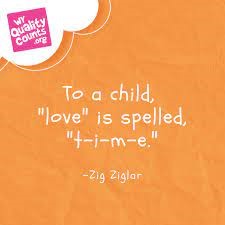
Every day many different things vie for our time, attention, and energy. As parents, we might have work, school, chores, family obligations, etc. As teachers, we have assessments, workshops, duties, and more. Sometimes it feels like the days are simply flying by, and we haven’t been able to spend more than a few moments with our kids.  An article on NAEYC (link below) reinforces the point that *quality* of time is much more important than quantity of time. Children need high-quality time with the adults in their lives. Quality Time is what is most beneficial and will positively affect them as they grow. “It isn’t about endless hours of time—it’s about how you choose to spend that time that truly matters.” The article lists 9 tips for ensuring the time we spend with our kids is truly quality time. While these tips are designed for parents, they can also be adapted to the classroom.  1 - have a daily “connect” time 2 - create a special daily ritual   3 - say “I love yo...

P - Love Does Play

Image
  “Play is often talked about as if it were a relief from serious learning. But for children, play is serious learning. Play is really the work of childhood.” The beloved Fred Rogers summed up the value of play in this well-known quote.  Unfortunately, it is becoming more common for teachers of even the youngest students to be pressured to pack every moment of the day with academically rigorous activities. At the same time, many parents feel pressured to enroll their children in a steady stream of highly structured extracurricular activities that fill the afternoons and weekends. Yet research confirms that up to age 8, children benefit from opportunities for developmentally appropriate play at home and in the classroom. According to an article on healthline.com (link below), some of the benefits of play include developing critical thinking skills, understanding cause and effect, building creative thinking, helping children learn how to interact with others, and helping ch...

O - Love Does Outside

Image
Sunshine - vitamin D and the immunity boost that comes with it Exercise - lower BMI, lower stress, better sleep  Academic performance - more concentration, better classroom performance, higher standardized test scores, increased creativity Socialization - greater self-awareness, improved peer relationships, increased confidence and responsibility  Appreciation of nature  These benefits listed on Harvard Health and Today’s Parent (links below) come from spending time outside.    As loving parents and teachers, most of us would agree that we want our kids to be physically healthy as well as well-rounded, independent, and compassionate individuals. The great thing is that by encouraging our kids to spend time outside, we can help cultivate all of these qualities. What can we do to encourage our kids to be outside more? Of course, a nature-inspired class field trip or a family camping vacation are great ideas, but there are smaller things we can do too. At home...

N - Love Does Needs

Image
Hangry. Most of us have experienced being Hangry - feeling grumpy, or even outright angry and not sure why only to realize after a snack or a meal how much better we feel. And many of us probably know the brain fog that comes after pulling an all-nighter. We can barely think of anything besides a nap. According to Abraham Maslow’s hierarchy of needs, all people - including the kids in our homes and classrooms - have basic needs that *must be met* before we can focus on higher needs like academics, creativity, and even our hobbies and interests.  Most of us have times when we are deprived of a good night’s sleep or a meal due to unusual circumstances. But when these most basic needs frequently go unmet, or there is uncertainty surrounding whether or not they will be met, people simply can not turn their focus to higher levels. What is important to realize is that Maslow’s hierarchy of needs does not stop with food and rest. While we must start here, we do not go straight from well-f...

M - Love Does Mistakes

Image
  Whether your kids are 2 or 22 (or anywhere in between!), they will make mistakes. And inevitably, as parents and teachers, we will mess up too. When our relationship with the children in our homes and classrooms is built on a foundation of love, we can use mistakes on both sides as an opportunity for learning and growth.  There are two ways we can approach mistakes that our kids or we make. Mistakes and mess-ups can be frustrating, embarrassing, or even painful and often carry consequences that need accountability. But a mistake should not define our kids or us.   How we approach mistakes can prevent learning or serve as a powerful catalyst to embrace new challenges. To paraphrase from an article on techtello.com (link below), people with a fixed mindset believe that they have a specific amount of talent or skill, and “that's that, and then their goal becomes to look smart all the time and never look dumb.” People with a growth mindset understand that “not knowing ...

L - Love Does Love Languages (All 5)

Image
* Words of Affirmation.   * Physical Touch.   * Acts of Service.   * Gifts.   * Quality Time.   These are the 5 Love Languages, according to the popular book by Gary Chapman.  The basic premise behind the writing is that every person has a preferred way or "language" to communicate and receive love.  When our preference differs from others, it can affect whether or not we feel loved - even when the other person is giving their love. Many people have embraced the idea of learning to speak the Love Language of their spouse or significant other to better communicate their love for each other.  Did you know similar principles apply when showing love to the kids in our homes and classrooms?  The book  The 5 Love Languages of Children,  also by Gary Chapman, discusses how we can determine which Love Languages our children prefer and explains how we can communicate our love using that preferred language. It also id...

K - Love Does Kindness

Image
 "Kind words can be short and easy to speak, but their echoes are truly endless." - Mother Teresa Kindness is one of the most powerful forces for good in our world. It is all the different ways we express care, concern, and consideration for ourselves and those around us. As loving parents and teachers, we simply must treat our kids and ourselves with kindness.   However, let us be clear: Being kind is not the same as allowing all behavior in our homes and classrooms, nor does it mean not standing up for ourselves and our needs and beliefs.  Yet even in times of disagreement or correction, every interaction we engage in can be approached with kindness. So what does this look like in our day-to-day lives? Kindness can come in many forms. Encouraging words and positive non-verbal communication are two ways we can frequently show kindness to the children in our lives. Sharing our resources - time, money, goods, and knowledge - is another way of being kind to others that...

J - Love Does Joy

Image
Ok. First off, let's be real. Being a joyful parent or teacher does NOT mean walking around with a goofy smile on your face all the time. It doesn't mean that if you feel unhappy in a situation that you are no longer a joyful person.  Joy and happiness are similar but not exactly the same thing. Joy comes from something deeper than happiness.    It comes from being at peace with who you are and your place in the world. Many articles are written on how to find joy in our lives – from focusing on our relationship with God, to trying a new hobby, to enjoying more sunsets - and one common thread is that being joyful is something we *choose*, not something that just happens to us. To be a joyful person, we must intentionally choose joy, but there are times when circumstances can make that choice hard to make. An article on Edutopia (link below) shares a few strategies that teachers - and parents too! - can use to reclaim their joy.  1 - Maximize your time - take some...